Preparing for an After-Hours Veterinary Visit With Your Dog or Cat
When your pet needs urgent care outside of regular business hours, being prepared can help you access the help your dog or cat needs with less stress. Whether you’re visiting an urgent care clinic or a facility like an UrgentVet veterinary animal hospital in Spartanburg, SC, knowing the right steps in advance can make an after-hours situation more manageable for you and your pet.
Unlike routine checkups, after-hours veterinary visits tend to feel more urgent and stressful for pet owners. You may find yourself anxious, coping with unexpected symptoms, or needing quick information late at night or on a weekend. Taking specific steps ahead of time can help reduce delays, ensure you communicate important details, and provide support to both you and your pet during an urgent or emergency visit.
Assessing urgency: Is it an emergency?
The first decision is whether your pet’s issue requires immediate after-hours care or if waiting for your regular vet is appropriate. Warning signs such as breathing difficulties, repeated vomiting or diarrhea, severe lethargy, known toxin exposure, collapse, or signs of significant pain are red flags that indicate prompt attention is needed.
Non-urgent issues, like mild limping, sneezing, or minor skin irritations, can usually wait if your pet is otherwise comfortable and not distressed. If in doubt, call an after-hours veterinary clinic for guidance.
Call ahead and prepare vital information
Whenever possible, contact the clinic before you leave home. This allows the veterinary staff to prepare and may provide you with advice for the drive over. Be ready with your pet’s age, breed, weight, current medications, and allergies. Also, bring a clear timeline describing symptom onset, any changes, and what your pet may have eaten or been exposed to. Photos or short videos of unusual behaviors or symptoms can be valuable for the veterinarian.
What to bring with you
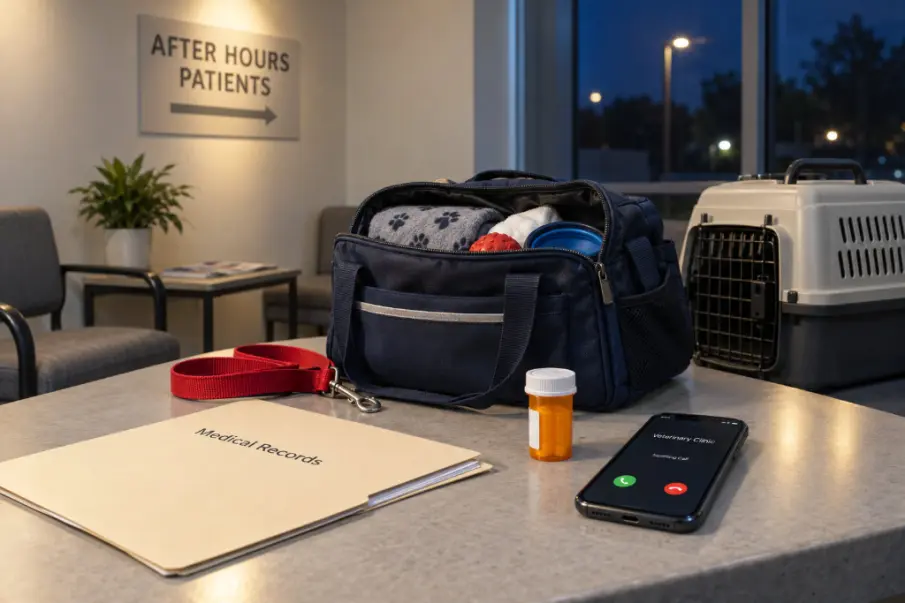
Before heading to an urgent care visit, gather these key items to help streamline your experience:
- Medical records, including vaccination documents, recent lab results, and chronic condition details
- Current medications, written dosages, or labeled containers
- Payment method, identification, and pet insurance details if available
- For cats: a secure carrier with a familiar towel or blanket
- For dogs: a leash and, if possible, a harness for control
Safe and calm transport
Keep your pet as calm and comfortable as possible while getting to the clinic. For pets that are injured or in pain, limit movement and avoid any handling that could worsen injuries. If you have more than one animal, separate them in the vehicle to minimize stress or risk of injury. Pets who are anxious or hurting may act out, so use caution when handling to avoid bites or scratches.
Helping your pet relax on arrival
Once at the clinic, remain calm and speak quietly to your pet. For cats, covering the carrier with a blanket or towel helps lower stress. Bringing familiar items, like a favorite blanket, can help both cats and dogs feel safer. In the exam room, tell staff about your pet’s anxiety or any handling preferences, but allow veterinary professionals to conduct necessary examinations and treatments.
Common intake questions to expect
Be prepared to answer questions about the onset and frequency of your pet’s symptoms, as well as changes in appetite, water intake, urination, or bowel movements. Also provide details about recent changes at home, such as new foods, travel, boarding, or any recent medications.
What happens during an after-hours visit
During after-hours care, pets are typically triaged so that those with life-threatening conditions receive priority. As a result, wait times may vary. Diagnostics such as bloodwork, x-rays, or other tests could be recommended depending on your pet’s symptoms. Treatments may involve pain management, fluids, or medications. You’ll receive instructions for at-home care and guidance on which symptoms warrant prompt reevaluation.
UrgentVet is here for after-hours veterinary urgent care for pets, because Your Pet Can’t Wait to Feel Better ®. As an alternative to a 24/7 emergency vet, UrgentVet clinics offer late-night, after-hours, weekend, and holiday care throughout the year, providing a lower-cost option than an emergency hospital for issues that require urgent attention but are not life-threatening. Please note that UrgentVet clinics are not open 24/7; their flexible hours offer care when many regular practices are closed but are not a replacement for round-the-clock emergency facilities.
Planning for what comes next
After returning home, coordinate with your regular veterinarian for any needed follow-up. Keep track of your pet’s symptoms, medication dosing, and any changes in appetite or behavior. This tracking helps support your pet’s ongoing care and recovery.
Checklist for pet owners heading to urgent care
- Assess the urgency of your pet’s situation
- Call the clinic ahead if possible and gather vital details
- Bring essential records and supplies
- Transport your pet safely and with minimal stress
- Keep your pet calm in the clinic environment
- Be ready to answer key intake questions
- Understand care procedures and follow discharge instructions
- Plan and document home care and follow-up
Preparation can make a significant difference when your pet needs urgent help. Staying organized and calm helps support positive outcomes for both you and your animal companion, whether you visit UrgentVet or another urgent care provider.